 SCIENTIFIC SKIN, HAIR & PERSONAL AESTHETICS
Concern guides
Exercise Recovery & Muscle Fatigue: understanding the concern and care options
Heavy legs after a new workout are different from a sharp injury or exhaustion that keeps returning. Understanding that difference helps you recover sensibly and plan your next session.
SkinGenious editorial team
Explore the guide ↓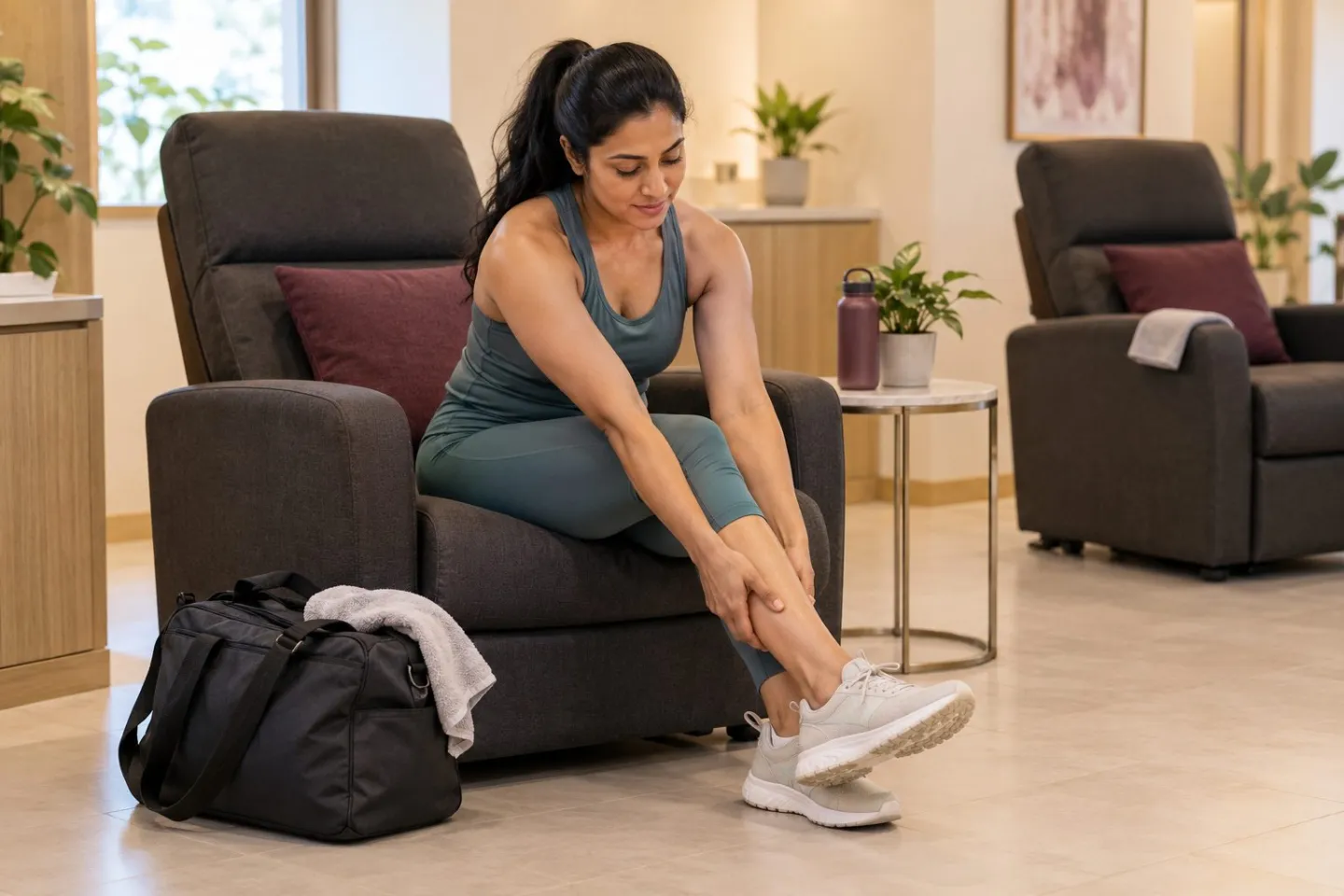
Understanding the concern
Exercise challenges muscle tissue and uses energy. Some soreness after an unfamiliar or harder session is expected, but the timing and character of discomfort matter. Delayed-onset muscle soreness usually appears after the workout rather than as a sudden painful event during it. Describe the following when seeking advice:
• Which activity changed: distance, weights, intensity or a new movement.
• Whether soreness began during exercise or over the following days.
• Whether discomfort is widespread or focused in one painful area.
• Any change in strength, swelling, urine colour or ability to move normally.
Read more: Cleveland Clinic: delayed-onset muscle soreness.
Recovery includes more than the time between workouts. Sleep, food, fluids and the balance between training and rest influence how ready you feel for the next session. Soreness is not a score of workout quality, and feeling very sore is not necessary for progress.
Causes and contributing factors
A sudden increase in workload, unfamiliar movements or returning after a break can leave muscles tender. Inadequate recovery time and under-fuelling may add to fatigue. Heat and sweating can create a separate hydration issue. Repeated poor recovery can also be a reason to review the training programme or investigate an underlying health concern.
How it is assessed
The clinician asks about the session, symptom timing and usual training pattern. A painful local area may need an examination for injury. Bring details of sports supplements and any recent changes in diet or medication. Tests are guided by findings such as marked weakness or suspected illness, rather than ordered automatically for normal post-workout soreness.
When to seek medical advice
Severe muscle pain, substantial swelling, unusual weakness or dark cola-coloured urine after exercise needs urgent assessment. Sudden focal pain, inability to bear weight or a loss of normal movement should be checked for injury.
Treatment and management options
For ordinary soreness, time, appropriate rest and gentle movement are usually central to recovery. Hydration and adequate meals support a return to your usual routine. An injury may need physiotherapy or another specific treatment. Recovery & Performance IV is SkinGenious’s related service for discussing hydration and selected nutrients. Its proposed ingredients include magnesium, taurine, B vitamins and glutamine. Correcting a fluid or nutrient deficit is different from proving that an infusion improves athletic performance or repairs an injury; those outcomes should not be assumed.
Hydration & Replenishment IV ↗
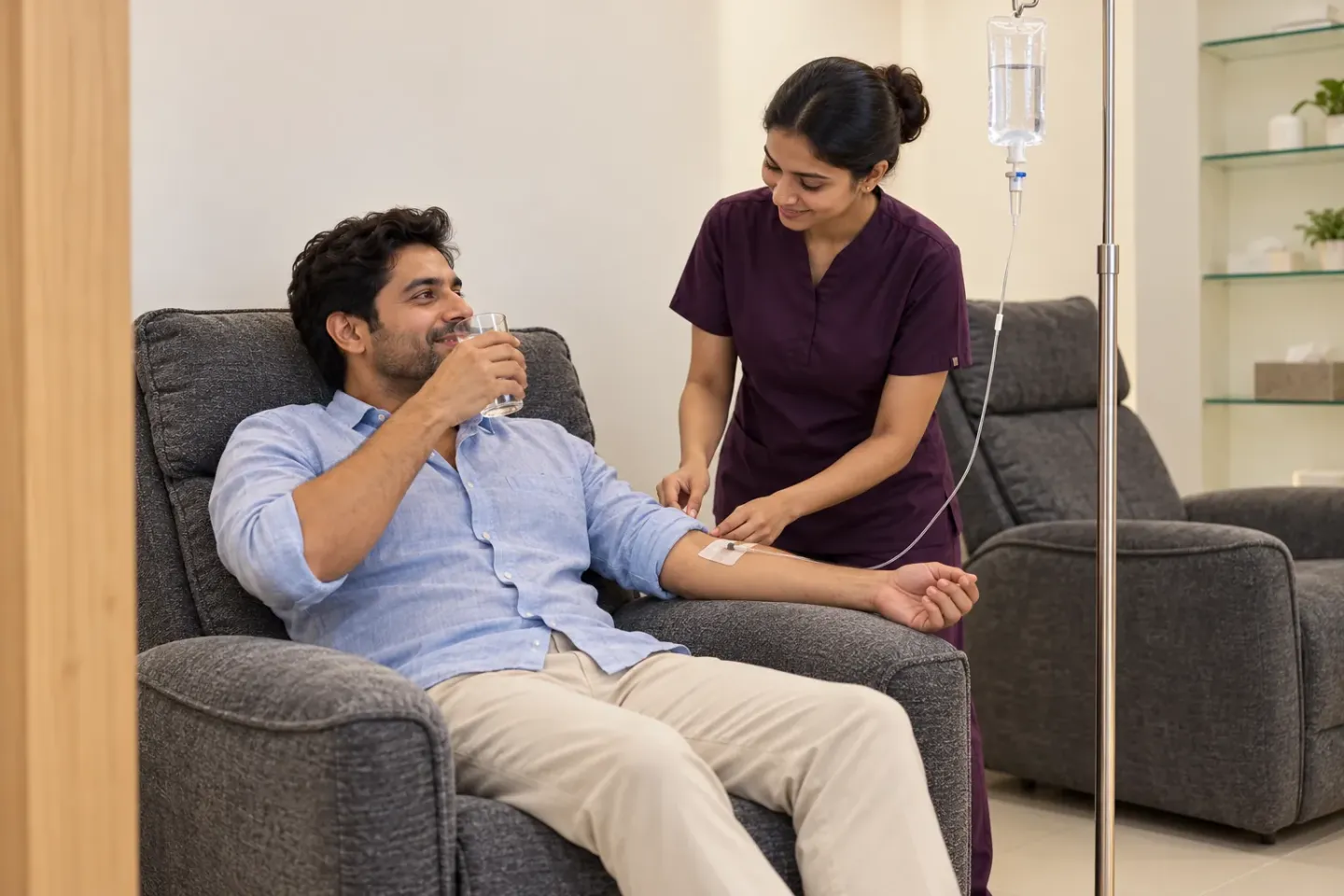
A focused hydration visit for times when fluid loss, poor intake or a demanding routine has left you feeling depleted. The plan starts with your hydration needs, then considers whether any additional nutrients have a useful role.

Recovery & Performance IV ↗
Recovery starts with understanding what your body has been asked to do. This service looks at hydration, food intake and training demands, with a nutrient selection centred on magnesium, taurine, B vitamins and glutamine.
What improvement can look like
Look for comfortable everyday movement and a gradual return towards your normal exercise tolerance. A good plan reduces the repeated cycle of overdoing a session and needing prolonged recovery. If symptoms worsen or fail to settle as expected, revisit the assessment instead of repeatedly treating them as routine soreness.
Understanding your treatment choices
Explain whether your priority is discomfort, hydration or a persistent drop in stamina. Ask whether training adjustments or a sports-medicine assessment would be more useful than a drip. Competitive athletes should check their sport’s current anti-doping rules before an infusion, including rules about the method of administration.
Everyday care and prevention
Increase training gradually and leave space for recovery between demanding sessions. Eat regularly, include protein-containing foods and replace fluids lost through exercise. Keep a simple training record so changes in workload and symptoms are visible. Resume harder sessions according to how you are functioning rather than trying to mask pain.
Explore related guides
Continue exploring the treatments, concerns and categories connected with this topic.
Treatment guides
Hydration & Replenishment IV
A focused hydration visit for times when fluid loss, poor intake or a demanding routine has left you feeling depleted. The plan starts with your hydration needs, then considers whether any additional nutrients have a useful role.
Read the guideRecovery & Performance IV
Recovery starts with understanding what your body has been asked to do. This service looks at hydration, food intake and training demands, with a nutrient selection centred on magnesium, taurine, B vitamins and glutamine.
Read the guideConcern guides

Dehydration
A hot commute, a stomach upset or a demanding workout can leave you short of fluid. The right recovery plan starts with how much you have lost, whether you can drink comfortably and what is causing the problem.
Read the guide
Hangover & Alcohol-Related Symptoms
A hangover can involve much more than thirst. Understanding the mix of poor sleep, stomach irritation and fluid loss helps set realistic expectations for recovery and any clinic visit.
Read the guideCategory guides
Take the next step
Explore care in your city
For local specialists, clinic information and appointments, choose a city.

Mumbai
Explore local specialists, clinics and appointments in Mumbai.
Explore care
Thane
Explore local specialists, clinics and appointments in Thane.
Explore care
Navi Mumbai
Explore local specialists, clinics and appointments in Navi Mumbai.
Explore care
Hyderabad
Explore local specialists, clinics and appointments in Hyderabad.
Explore care
Jaipur
Explore local specialists, clinics and appointments in Jaipur.
Explore care