 SCIENTIFIC SKIN, HAIR & PERSONAL AESTHETICS
Concern guides
Brittle Nails: understanding the concern and care options
Peeling, splitting nails are often a problem of repeated wear, wet work or manicure damage. Looking at the pattern helps distinguish everyday fragility from a nail condition or nutritional issue that needs treatment.
SkinGenious editorial team
Explore the guide ↓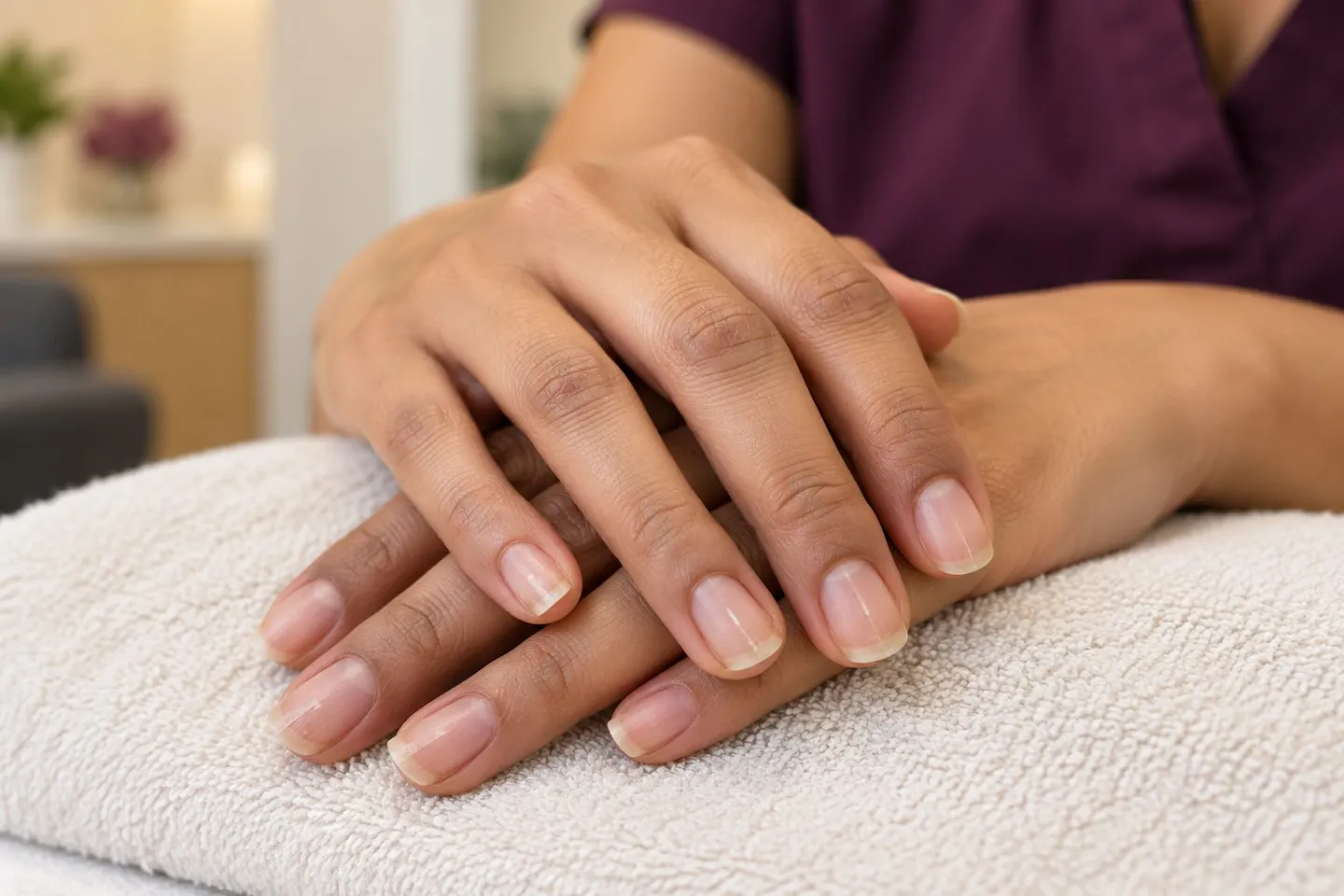
Understanding the concern
Brittle nails may split at the tips, peel in thin layers or break before reaching the length you want. Their appearance can be frustrating, but it does not automatically mean that you need biotin or an IV treatment. Bring attention to the pattern rather than just the word “weak”:
• Whether one nail or several nails are affected.
• Peeling at the edge versus a change beginning near the base.
• Recent gel, acrylic, polish-removal or manicure habits.
• Associated pain, colour change, thickening or skin irritation.
Read more: American Academy of Dermatology: reducing artificial-nail damage.
The visible nail is made of keratin. Damage to an existing edge cannot be reversed simply by adding a nutrient; healthier growth has to emerge over time. This makes nail care a gradual project, and it helps to distinguish protection of the current nail from treatment of a cause affecting new growth.
Causes and contributing factors
Repeated wetting and drying, detergents, solvents and manicure procedures can contribute to fragility. Nail inflammation, fungal infection and certain health conditions may produce changes that resemble brittleness. Nutritional deficiency is one possibility when the wider history supports it, rather than the default explanation for every split nail.
How it is assessed
A dermatologist examines the nail surface, edges and surrounding skin and asks about hand use and nail products. Bring photographs if the appearance varies. If infection is suspected, a sample may be useful. Blood tests are considered when diet, symptoms or examination suggest a systemic or nutritional cause.
When to seek medical advice
Seek assessment for painful swelling, pus, a new or changing dark band, significant nail separation or a persistent change in a single nail. These findings need a diagnosis rather than cosmetic strengthening alone.
Treatment and management options
Protecting nails from repeated trauma and irritation is often the first step. A diagnosed infection or inflammatory nail condition needs specific treatment. If a deficiency is identified, replacement should target it. Hair & Nail Nutrient Therapy is the related SkinGenious service. Zinc, B12 or folate may be discussed when relevant; biotin is not a routine solution for every brittle nail. Tell your clinician and laboratory about biotin supplements, as they can interfere with some blood tests. An infusion cannot promise a stronger nail immediately.

Hair & Nail Nutrient Therapy ↗
Hair shedding and fragile nails can sometimes involve nutritional factors, but they have many other causes too. This service connects a proper hair and nail assessment with a targeted discussion of zinc, B12, folate and, where relevant, biotin.

Personalised IV Nutrient Therapy ↗
A personalised plan begins with the reason you are seeking care—not a preselected bag of ingredients. This service brings your symptoms, routine, nutritional history and relevant results together to decide what, if anything, should be included.
What improvement can look like
Look for fewer new splits and a healthier strip growing from the base rather than expecting the damaged edge to disappear. Nail improvement is usually judged over months. Keeping photographs at similar intervals can make gradual change easier to see and help decide whether the plan is working.
Understanding your treatment choices
Explain your everyday hand use and the length or appearance you want to maintain. Ask whether the main issue is external damage, a nail disorder or a possible deficiency. Before paying for nutrient treatment, clarify what finding it addresses and how benefit will be reviewed. The same ingredient list is unlikely to suit every nail problem.
Everyday care and prevention
Keep nails at a practical length and smooth rough edges gently. Moisturise hands and nails after washing and use suitable gloves for wet work. Avoid picking off gel or acrylic products and give damaged nails time away from repeated procedures. Do not cut or aggressively push back cuticles; they help protect the surrounding area.
Explore related guides
Continue exploring the treatments, concerns and categories connected with this topic.
Treatment guides
Hair & Nail Nutrient Therapy
Hair shedding and fragile nails can sometimes involve nutritional factors, but they have many other causes too. This service connects a proper hair and nail assessment with a targeted discussion of zinc, B12, folate and, where relevant, biotin.
Read the guidePersonalised IV Nutrient Therapy
A personalised plan begins with the reason you are seeking care—not a preselected bag of ingredients. This service brings your symptoms, routine, nutritional history and relevant results together to decide what, if anything, should be included.
Read the guideConcern guides

Dehydration
A hot commute, a stomach upset or a demanding workout can leave you short of fluid. The right recovery plan starts with how much you have lost, whether you can drink comfortably and what is causing the problem.
Read the guide
Fatigue & Low Energy
When ordinary tasks start to feel unusually draining, it helps to look beyond a quick energy boost. Sleep, food, stress, medicines and medical conditions can all contribute—and each calls for a different response.
Read the guide
Immune Health
If you feel you are catching everything or taking longer to recover, start with the pattern—not a promise to “boost immunity.” Nutrition, sleep, exposure and existing health conditions all deserve attention.
Read the guide
Vitamin & Nutrient Deficiencies
A nutrient deficiency is best treated with a clear answer to three questions: what is low, why it is low and which replacement route will work. A tailored plan is more useful than adding every available vitamin.
Read the guideCategory guides

Take the next step
Explore care in your city
For local specialists, clinic information and appointments, choose a city.

Mumbai
Explore local specialists, clinics and appointments in Mumbai.
Explore care
Thane
Explore local specialists, clinics and appointments in Thane.
Explore care
Navi Mumbai
Explore local specialists, clinics and appointments in Navi Mumbai.
Explore care
Hyderabad
Explore local specialists, clinics and appointments in Hyderabad.
Explore care
Jaipur
Explore local specialists, clinics and appointments in Jaipur.
Explore care