 SCIENTIFIC SKIN, HAIR & PERSONAL AESTHETICS
Concern guides
Unwanted hair: understanding the concern and care options
Unwanted hair is hair growth that a person would prefer to reduce or remove. Its amount and distribution vary naturally, and the right approach depends on the area, hair colour and skin tone.
SkinGenious editorial team
Explore the guide ↓
Understanding the concern
Hair removal can be undertaken for the following reasons:
Cosmetic: This is by far the most common reason for undergoing laser hair reduction. The desire to lose unwanted body hair to look better.
Medical reasons: The various medical indications for which people may seek laser hair removal include hirsutism (often associated with poly cystic ovarian disease), hypertrichosis, recurrent pilonidal sinus, pseudofolliculitis and faun tail nevi.
Individuals with darker, coarser hair and pale skin are candidates to see better results. With dark skin and light-colored hair, the results may not be great.
Removal of unwanted body hair has been a beauty ritual for a long time.
Unwanted hair is hair growth that a person would prefer to reduce or remove. Its amount and distribution vary naturally, and the right approach depends on the area, hair colour and skin tone.
Causes and contributing factors
Genetics and hormonal influences play a role. New coarse facial or body hair, particularly with other changes, may need an assessment for an underlying hormonal cause.
How it is assessed
The clinician asks when growth began, which removal methods have been used and whether there are skin or hormonal symptoms. Tests are selected when the history suggests a reason.
When to seek medical advice
Rapidly increasing coarse hair, a change in voice or hair growth with irregular periods should be discussed with a clinician rather than managed only cosmetically.
Treatment and management options
Shaving, trimming, waxing, threading, depilatories, laser reduction and electrolysis offer different balances of convenience and durability. Reactive skin may limit some choices.
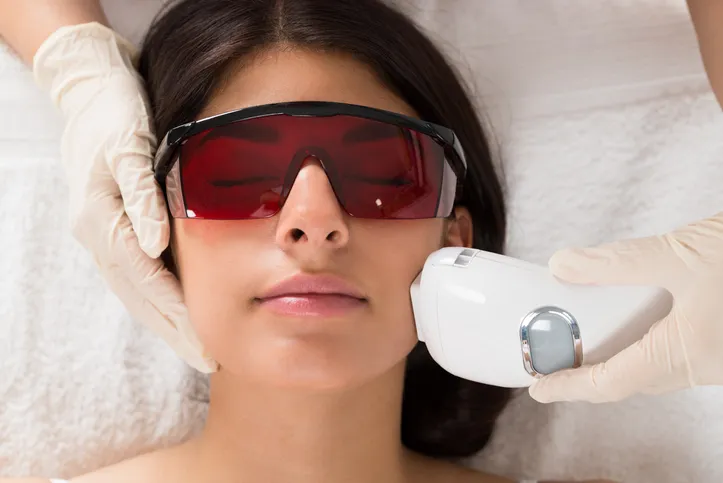
Laser Hair Removal ↗
Laser Hair removal is a process of using light at the right wavelengths to target the color pigments in hair follicles (the root of the hair). The principle on which it works is known as selective photothermolysis, a fancy way of saying that the light selectively breaks cell structures of a specific color through generation of heat. In the case of laser hair removal, these are basal stem cells that lead to hair growth from the follicle. This helps de-activate the follicles from future growth. When we say selective, it also means that the laser does not affect other structures around it, which includes the skin. Laser hair reduction does not give desirable results in a single session. We must repeat the procedure multiple times to target hair follicles in different phases of growth. A total of 6-8 sessions are usually enough to permanently reduce 80-100% of hair growth.
What improvement can look like
Laser is usually more effective on pigmented hair than grey or very light hair. Several sessions and sometimes maintenance are needed, and future hormonal change can affect growth.
Laser Hair Removal for Unwanted hair
The treatment requires 7-8 sessions to give long-term results. It is capable of all showing 100% reduction in hair growth, but that is dependent on the nature of hair etc. In all cases (except grey hair), it will lead to reduction in hair growth and in case some follicles are left behind, the hair will be much finer that before.
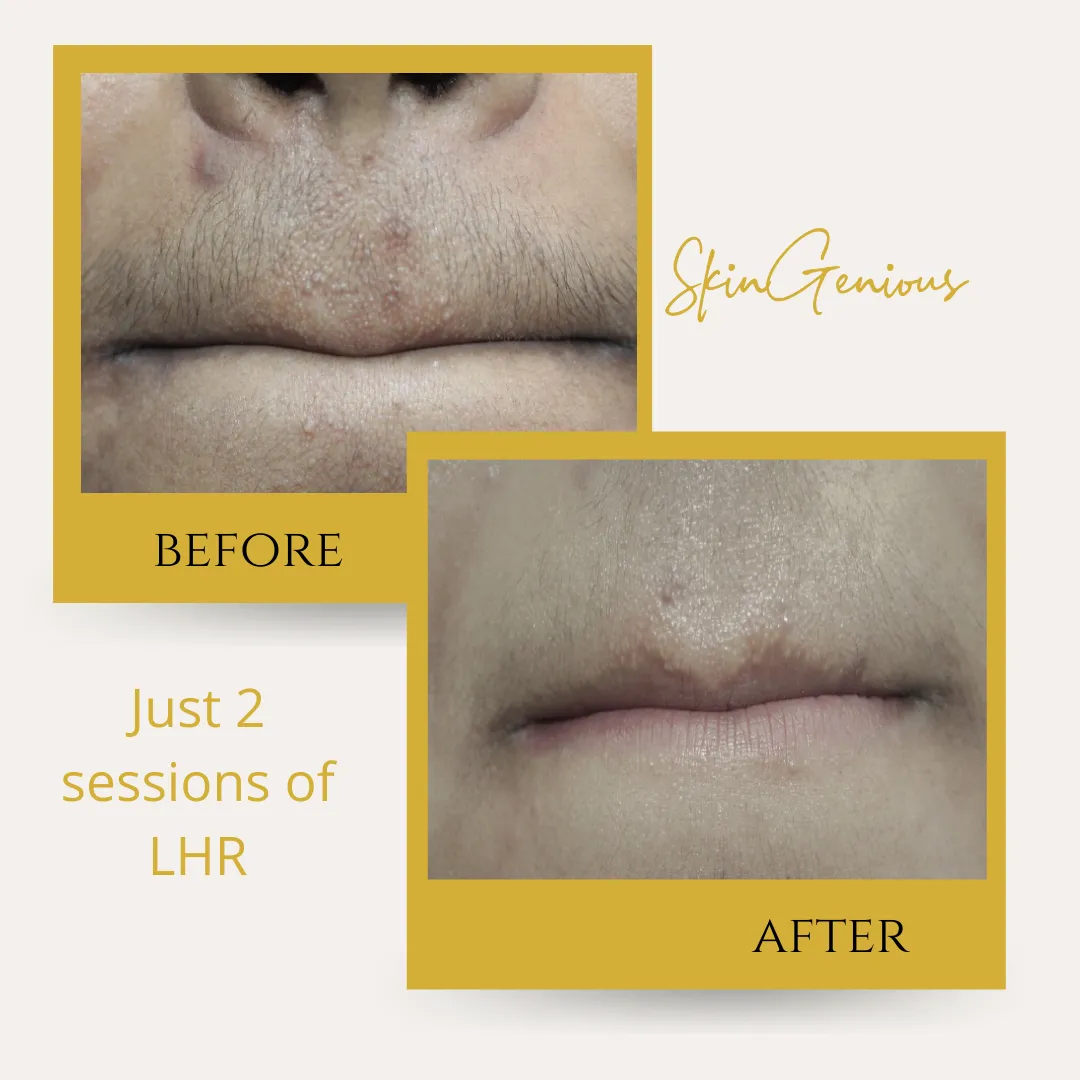
Before and after results
These photographs come from the existing treatment and concern records. They illustrate individual outcomes. Your starting point, treatment plan and healing response affect your own result.
Understanding your treatment choices
Unwanted hair can be a cosmetic concern, a source of repeated shaving irritation or a sign of a changing growth pattern. The location, thickness and speed of growth help decide whether the main need is hair reduction, treatment for ingrown hairs or a medical assessment. Laser is generally more useful for pigmented hair than for white or very light hair. Electrolysis may be discussed for selected hairs that do not suit laser, while shaving or other temporary methods remain practical options. The choice depends on the area and the result you want, not on a claim that one method suits everyone. A change in facial growth deserves particular attention if it is sudden or occurs with irregular periods, scalp thinning or other hormonal symptoms. Investigating a possible cause can sit alongside cosmetic treatment. It does not mean you have to wait indefinitely before discussing ways to manage the hair. Before starting a course, agree which areas should be reduced and which should be left alone. Track regrowth, how often you shave and whether irritation improves. Hair cycles make a sequence of sessions necessary, and maintenance may still be useful later. Avoid comparing your response with a different body area or another person's treatment schedule.
Everyday care and prevention
Choose a removal method your skin tolerates. Recurrent ingrown hairs or inflammation deserve a tailored plan instead of increasingly aggressive hair removal.
Explore related guides
Continue exploring the treatments, concerns and categories connected with this topic.
Treatment guides
Category guides

Common questions
Can unwanted hair be reduced permanently?
Yes, laser hair removal is a solution available to help deal with unwanted hair. The reduction achieved is long-term.
Can women with PCOS undergo Laser hair removal?
Yes, Laser hair removal is an effective solution for women with PCOS.
How is the right care plan chosen?
The clinician asks when growth began, which removal methods have been used and whether there are skin or hormonal symptoms. Tests are selected when the history suggests a reason.
What can I do as part of everyday care?
Choose a removal method your skin tolerates. Recurrent ingrown hairs or inflammation deserve a tailored plan instead of increasingly aggressive hair removal.
When should I get advice?
Rapidly increasing coarse hair, a change in voice or hair growth with irregular periods should be discussed with a clinician rather than managed only cosmetically.
Further reading and references
Take the next step
Explore care in your city
For local specialists, clinic information and appointments, choose a city.

Mumbai
Explore local specialists, clinics and appointments in Mumbai.
Explore care
Thane
Explore local specialists, clinics and appointments in Thane.
Explore care
Navi Mumbai
Explore local specialists, clinics and appointments in Navi Mumbai.
Explore care
Hyderabad
Explore local specialists, clinics and appointments in Hyderabad.
Explore care
Jaipur
Explore local specialists, clinics and appointments in Jaipur.
Explore care