 SCIENTIFIC SKIN, HAIR & PERSONAL AESTHETICS
Treatment guides
Laser Hair Removal: how it works, suitability and aftercare
Laser hair removal reduces unwanted growth by targeting pigment in hair follicles. Explore how hair colour, skin tone and the treatment area influence the course and its results.
SkinGenious editorial team
Explore the guide ↓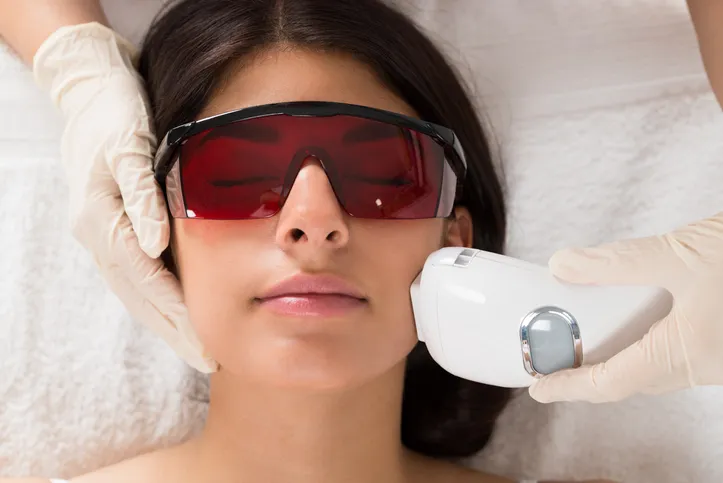
Understanding the treatment
Laser hair removal is an increasingly popular method for men and women to get rid of unwanted body hair. The first approvals for using lasers in cosmetology for permanent hair removal were received in the 1990's, after its efficacy was proven over decades long research. The technology has evolved to become more effective, consumer friendly and pain free since then. Today the global rate of growth for usage of lasers in hair removal is close to 16% every year. In Mumbai, we have noticed a growth much higher than this for permanent hair removal treatments over the last year.
Laser Hair removal is a process of using light at the right wavelengths to target the color pigments in hair follicles (the root of the hair). The principle on which it works is known as selective photo-thermolysis, a fancy way of saying that the light selectively breaks cell structures of a specific color through generation of heat.
In the case of laser hair removal, these are basal stem cells that lead to hair growth from the follicle. This helps de-activate the follicles from future growth. When we say selective, it also means that the laser does not affect other structures around it, which includes the skin. Laser hair reduction does not give desirable results in a single session. We must repeat the procedure multiple times to target hair follicles in different phases of growth. A total of 6-8 sessions are usually enough to permanently reduce 80-100% of hair growth.
The principle is universal for all permanent hair removal machines used across the globe.
Laser hair removal aims to reduce unwanted hair growth by targeting pigment in hair follicles. It is more accurately described as long-term hair reduction than a promise that every hair will disappear permanently.
How it works
It is important for you to have realistic expectations when you are going in for any cosmetic treatment. It is the same with laser hair removal in Mumbai. As shared before, it is people with darker, thicker hair and a pale skin tone who can expect the best results.
If you have darker skin and thin hair, the results achieved would not be as good. Overall, you would see a 70-100% reduction in hair growth after laser hair removal. Even the hairs that do persist, would be much finer in nature and maintenance sessions at much longer gaps may be required for some people through life. It is still however, a method that saves you more time over traditional methods, considering the long gaps between maintenance sessions (if required).
Between 2 sessions, you need to allow time for the hair to grow back so that the follicles can be targeted. Hence, you need to wait for 4-6 weeks between sessions and this time frame slightly increases as the sessions go on. After your sessions, you need to be careful about a couple of things. Look for signs of redness, irritation or changes in pigmentation. These are easily manageable and reversible, but you must inform your skin specialist for them to be able to do so. In case the body part you underwent the treatment for is exposed, please do not forget to apply sunscreen. Permanent hair removal does provide very rewarding results.
Light is absorbed by melanin in the hair and converted to heat. Growing hairs are more responsive, which is why a course of sessions is commonly discussed.
Suitability and assessment
Hair colour, thickness, skin tone, tanning and hormonal influences affect the plan. Very light, grey or white hair responds poorly, and new facial hair may need a hormonal assessment.
What happens during treatment
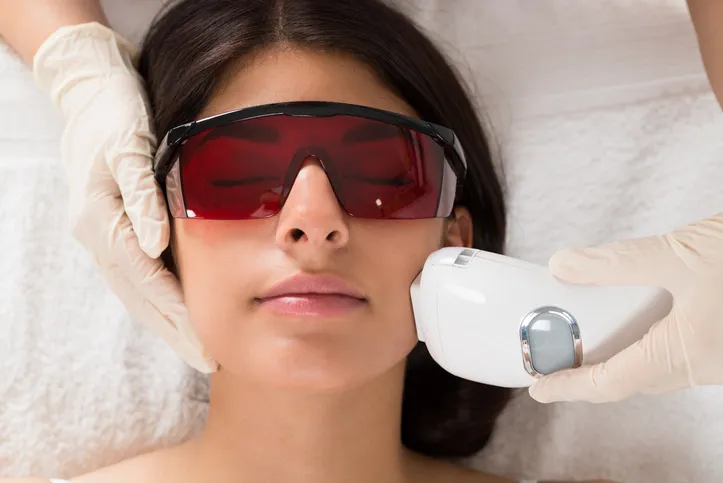
The treatment area is assessed, prepared and shaved as instructed. Eye protection and appropriate cooling are used while laser pulses are delivered to the agreed area.

In-person consultation
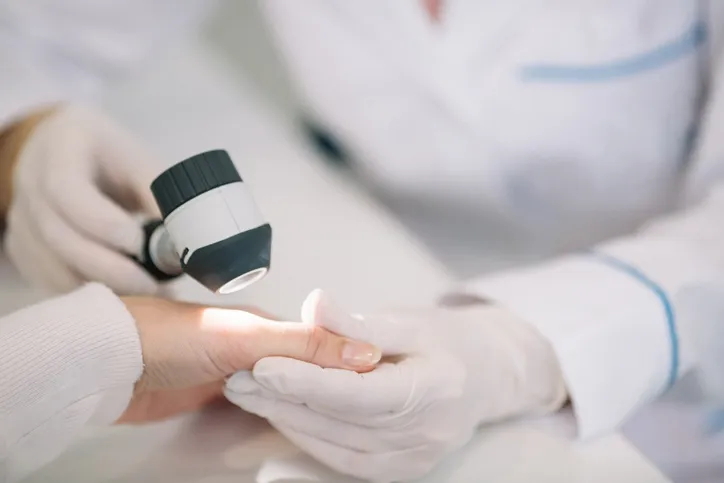
You will meet the dermatologist and they will assess the condition of your hair. They will collect the relevant medical history and also assess the quality of your hair to provide a fair assessment of what you can expect and how permanent hair removal can be.
Expectation setting
The dermatologist will provide you a fair idea of the number of sessions you need and the budget involved. You can plan the schedules of your sessions also during this consultation and adjust as you go along.
Treatment
The permanent hair removal treatment will be performed by the dermatologist themselves or may be assisted by trained technicians. The treatment is non-invasive and involves the application of a probe to the correct target areas.
Results and limitations
Reduction develops across hair cycles, and maintenance may be needed. Hormonal change can influence future growth even after a successful course.
Laser Hair Removal for Unwanted hair
The treatment requires 7-8 sessions to give long-term results. It is capable of all showing 100% reduction in hair growth, but that is dependent on the nature of hair etc. In all cases (except grey hair), it will lead to reduction in hair growth and in case some follicles are left behind, the hair will be much finer that before.
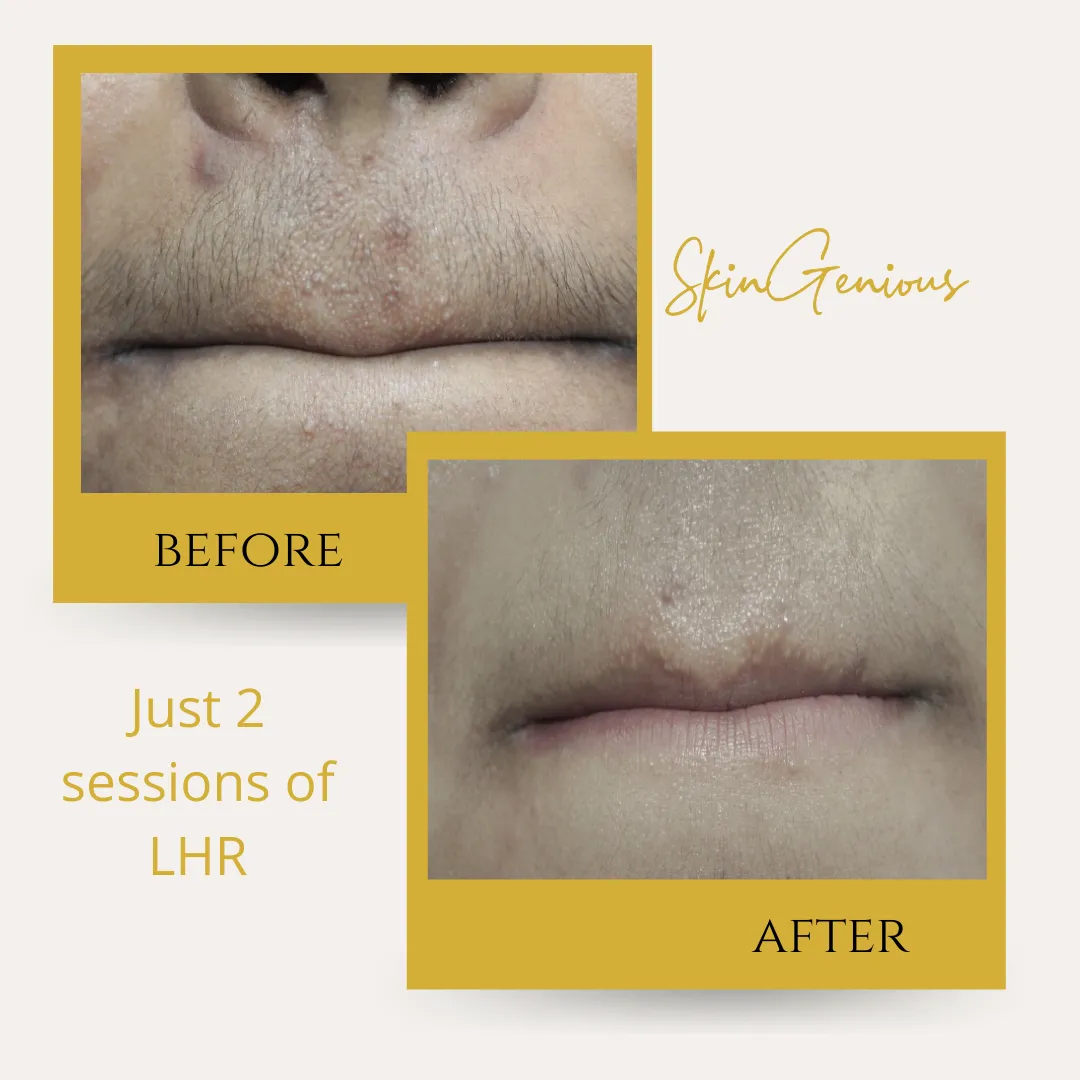
Before and after results
These photographs come from the existing treatment and concern records. They illustrate individual outcomes. Your starting point, treatment plan and healing response affect your own result.
Risks and recovery
Temporary redness and follicular swelling are common. Burns, pigment changes, scarring and paradoxical increased hair growth are possible risks.
- Inflammation & irritation: it may cause temporary redness & swelling, but even when they occur, they generally disappear within a few hours.
- Skin Color changes: Laser hair removal may lead to lightening or darkening of the skin, but this is again very rare. The pigmentation changes may be temporary or long term.
- Excessive hair growth around the treated area may happen again in rare cases.
Preparing for treatment
Bring details of previous procedures, medicines, allergies and any change in your health. Ask which skincare products or activities need adjusting before the appointment. Do not stop prescribed medicines without advice.
Any change to prescribed medicines, including blood thinners, must be agreed with the prescribing clinician.
- no blood thinning supplements like aspirin to be taken for 2 weeks before a treatment session
- no smoking means lesser chances of bruising etc.
- check with your specialist if any of the products in your skin care routine can interfere with the treatment results.
Aftercare
Follow instructions about shaving and avoiding plucking or waxing during the course. Protect the area from sun and report blistering or persistent pain.
Alternatives to consider
Electrolysis and temporary hair-removal methods have different advantages. A suitable device and operator are particularly important when treating darker skin tones.
Planning treatment and maintenance
Laser hair removal is most useful when the target hair contains enough pigment for the device to recognise. Coarse dark hair often responds differently from fine facial hair, while white or very light hair may respond poorly. Skin tone also matters because the clinician needs to target the hair while protecting the surrounding skin.
A course of treatment is planned around hair growth cycles. Not every follicle is in the same phase at the same time, so one session does not treat all future growth. The interval and number of sessions depend on the area, growth pattern and response. Hormonal facial hair may need ongoing management as well as laser treatment.
Tell the clinic about recent tanning, waxing, medicines and previous reactions. Waxing or plucking removes the structure the laser is trying to target; the clinic will explain how to prepare the area, including when to shave. A patch test may be advised when selecting settings, but it does not replace assessment at later visits.
Look for progress in the density and coarseness of regrowth, how often you need to shave and whether the treated area is easier to maintain. Maintenance sessions can be useful for remaining growth. For facial hair that is becoming thicker quickly, or appears alongside irregular periods or other hormonal symptoms, a medical assessment can help address the cause alongside hair reduction.
What affects the cost
The area treated, the product or device, the treatment plan and the number of sessions influence the total. A useful estimate explains what is included, what follow-up involves and whether maintenance is likely. City pages provide the local service information.
Explore related guides
Continue exploring the treatments, concerns and categories connected with this topic.
Concern guides

Category guides

Common questions
What are the side effects of Laser Hair Removal?
Laser Hair removal does not generally have side effects. It is completely safe and a long-tested method. The machines used are USFDA approved. However, under rare circumstances it may lead to: a) Inflammation & irritation: it may cause temporary redness & swelling, but even when they occur, they generally disappear within a few hours. b) Skin Color changes: Laser hair removal may lead to lightening or darkening of the skin, but this is again very rare. The pigmentation changes may be temporary or long term. Excessive hair growth around the treated area may happen again in rare cases.
Should I choose Laser hair removal with a skin specialist doctor?
We recommend that you undertake your laser hair removal at a good dermatologist’s clinic rather than a regular corporate clinic chain. This is because a good dermatologist knows the exact setting on the machine required depending on your skin-type, skin color and hair thickness. This helps avoid the possible side effects in the first place. Also, a dermatologist is a specialized doctor, so in case they do occur, a qualified dermatologist is much better placed to guide you through reversing the side-effects.
What is the laser hair removal process?
Your dermatologist will guide you through the entire process once you opt for Laser hair removal. A brief discussion of the steps includes: – consultation on first visit where the dermatologist will evaluate if you are an ideal candidate and what levels of improvement can be expected. – Shaving of the target area – Application of gliding gel for the probe – Emission of light energy on the target area – Cleaning, after which you may get back to work or home
Is laser hair removal painful?
No, with the latest technologies, Laser hair removal is no longer painful. You may just feel mild sensations.
At what age can I start laser hair removal?
Unwanted body hair appears only after you have hit puberty. You must hence be post-pubertal to go ahead with laser hair removal. There is no specific age recommendation. However, most dermatologists will not advise you to go ahead with the treatment before the age of 14. Some might ask you to wait till the age of 16.
What should I understand before choosing laser hair removal?
Hair colour, thickness, skin tone, tanning and hormonal influences affect the plan. Very light, grey or white hair responds poorly, and new facial hair may need a hormonal assessment.
What results should I expect?
Reduction develops across hair cycles, and maintenance may be needed. Hormonal change can influence future growth even after a successful course.
How do I compare this with other options?
Electrolysis and temporary hair-removal methods have different advantages. A suitable device and operator are particularly important when treating darker skin tones.
Further reading and references
Take the next step
Explore care in your city
For local specialists, clinic information and appointments, choose a city.

Mumbai
Explore local specialists, clinics and appointments in Mumbai.
Explore care
Thane
Explore local specialists, clinics and appointments in Thane.
Explore care
Navi Mumbai
Explore local specialists, clinics and appointments in Navi Mumbai.
Explore care
Jaipur
Explore local specialists, clinics and appointments in Jaipur.
Explore care