 SCIENTIFIC SKIN, HAIR & PERSONAL AESTHETICS
Concern guides
Eczema: understanding the concern and care options
Eczema describes a group of inflammatory skin conditions that often cause itch, dryness and a rash. Atopic eczema and contact dermatitis are examples with different contributing factors.
SkinGenious editorial team
Explore the guide ↓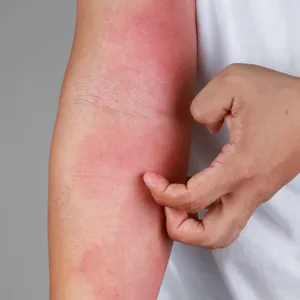
Understanding the concern
Eczema, also known as atopic dermatitis, is a condition which causes your skin to be itchy, red and dry. It is a form of dermatitis or 'inflammation of the skin'. This condition occurs because the barrier function of the skin is partially lost. The skin therefore becomes more prone to dryness and infection. The condition is fairly common and is not contagious.
Eczema can be caused by an immune reaction of your body, environmental factors or by genetic factors.
Individuals who are as it is more prone to allergic reactions are also more prone to eczema. Genetic factors hence also play a role because they can lead to you being hyper-allergic. Also, in case your body has a genetic inability to produce certain proteins that keep the skin barrier function, it predisposes you to eczema.
Stress can also trigger eczema and so can extreme weather like cold or sweatiness.
There are medications available to help you manage the condition, although no permanent cure is available.
Eczema describes a group of inflammatory skin conditions that often cause itch, dryness and a rash. Atopic eczema and contact dermatitis are examples with different contributing factors.
Causes and contributing factors
Skin-barrier changes, immune activity, irritants and allergies can contribute. A product tolerated by one person may trigger symptoms in another.
How it is assessed
Assessment reviews the rash pattern, exposures and timing. Patch testing may help when allergic contact dermatitis is suspected; it is not required for every case.
When to seek medical advice
Seek prompt advice for painful spreading redness, weeping, fever or rapidly worsening blisters. Persistent itch or sleep disturbance also deserves review.
Treatment and management options
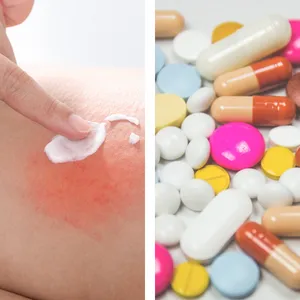
Moisturiser and trigger management support care, while prescription anti-inflammatory treatment may be needed for flares. More extensive disease can require specialist systemic treatment.
Skin medications ↗
The medications help control the symptoms to help you lead your life normally.
What improvement can look like
Eczema can improve substantially with a suitable plan, but many forms recur. Avoiding all treatment can leave inflammation uncontrolled and lead to scratching and infection.
Understanding your treatment choices
Eczema is often recognised by itch, dryness and inflamed skin, but there are different types and triggers. Atopic eczema, irritation and contact allergy can require different decisions. The location, timing and products touching the area help guide the assessment.
Moisturising supports the skin barrier, while prescribed anti-inflammatory treatment controls a flare when needed. Ask for a clear plan for each body area, including how long to use a medicine and what to do when the skin settles. The face and skin folds may need different products from thicker skin on the hands or body.
If eczema repeatedly affects the same area, bring details of cosmetics, cleansers, gloves, jewellery or work-related exposures. Patch testing may be considered where contact allergy is suspected. Removing every product or food without evidence can make daily life difficult without identifying the cause.
Track itch, sleep, cracks and the frequency of flares as well as visible redness. Increasing pain, warmth, discharge or rapidly worsening eczema needs review for possible infection or another problem. The aim is comfortable skin and fewer flares with a routine that is practical enough to maintain, rather than chasing a short-lived improvement through repeated changes.
Everyday care and prevention
Use a simple, fragrance-free routine where tolerated, moisturise regularly and follow the prescribed flare plan. Avoid harsh exfoliation on inflamed skin.
Explore related guides
Continue exploring the treatments, concerns and categories connected with this topic.
Treatment guides
Concern guides
Psoriasis
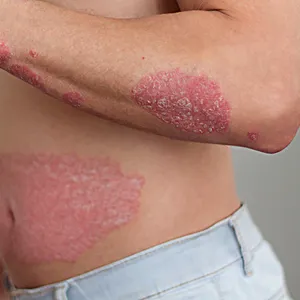
Psoriasis is a long-term inflammatory condition that can affect skin, scalp and nails. It is not contagious and is different from ordinary dry skin.
Read the guide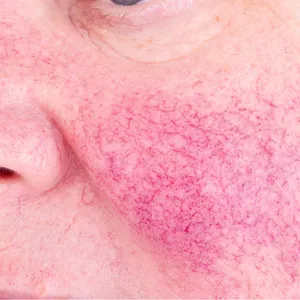
Rosacea
Rosacea is a chronic facial condition that can cause flushing, persistent colour change, visible vessels or acne-like bumps. Some people also have eye symptoms.
Read the guideCategory guides
Common questions
How is the right care plan chosen?
Assessment reviews the rash pattern, exposures and timing. Patch testing may help when allergic contact dermatitis is suspected; it is not required for every case.
What can I do as part of everyday care?
Use a simple, fragrance-free routine where tolerated, moisturise regularly and follow the prescribed flare plan. Avoid harsh exfoliation on inflamed skin.
When should I get advice?
Seek prompt advice for painful spreading redness, weeping, fever or rapidly worsening blisters. Persistent itch or sleep disturbance also deserves review.
Further reading and references
Take the next step
Explore care in your city
For local specialists, clinic information and appointments, choose a city.

Mumbai
Explore local specialists, clinics and appointments in Mumbai.
Explore care
Thane
Explore local specialists, clinics and appointments in Thane.
Explore care
Navi Mumbai
Explore local specialists, clinics and appointments in Navi Mumbai.
Explore care
Jaipur
Explore local specialists, clinics and appointments in Jaipur.
Explore care