 SCIENTIFIC SKIN, HAIR & PERSONAL AESTHETICS
Concern guides
Unwanted tattoo: understanding the concern and care options
An unwanted tattoo can be a concern because of its design, colour, location or an associated skin reaction. The options depend on the tattoo and what result the person wants.
SkinGenious editorial team
Explore the guide ↓
Understanding the concern
Getting a permanent tattoo is a way of expressing ourselves. They have been part of tribal traditions for centuries and are no less popular in modern times. The tattoo industry in India is said to be worth more than 3 billion dollars in 2021.
Permanent tattoo removal with lasers come handy when we change our minds about our body ink at a later stage in life. Most tattoos are meant to be permanent. But thanks to modern science, they don’t have to be so long lasting any more. Apart from this, there are certain kinds of tattoos caused by trauma (hence not intentional), which can also be removed.
We can divide tattoos into five types:
- Traumatic tattoos or natural tattoos that occur from colored substances entering into wounds
- Amateur tattoos : done by individuals themselves or by friends, mostly by placing India ink under the skin with a pin
- Professional tattoos: done by professionals using cultural methods or modern methods like a tattoo gun
- Cosmetic tattoos: Used for permanent make-up such as eyebrows or eyeliners or even for covering up hypopigmented vitiligo patches
- Medical tattoos: commonly made and used by physicians to delineate permanent landmarks for radiation therapy
Out of these tattoo types, the toughest to remove are the traumatic tattoos because the pigments are highly dissipated and present across several layers of skin. Amateur tattoos are the easiest to remove with the best outcomes. Professional tattoos are also removed, but take a higher number of sessions.
The laser treatment targets the pigment molecules to break them down. Black and blue tattoos are the easiest to remove whereas yellow and green are the toughest, and removal may not give desired results with the latter two colors.
An unwanted tattoo can be a concern because of its design, colour, location or an associated skin reaction. The options depend on the tattoo and what result the person wants.
Causes and contributing factors
Changes in preference are common. Ink reactions, migration, an unwanted cosmetic tattoo or scarring can also influence the decision to seek advice.
How it is assessed
Assessment considers ink colours, tattoo age and depth, skin tone and pre-existing scars. Cosmetic tattoo pigments may behave differently during laser treatment.
When to seek medical advice
Persistent itching, swelling, an ulcer or a changing lesion within a tattoo needs medical assessment before cosmetic removal.
Treatment and management options
Laser treatment can fade selected pigments over multiple sessions. A professional cover-up or, in selected cases, surgical removal may also be discussed.
Laser Tattoo Removal ↗
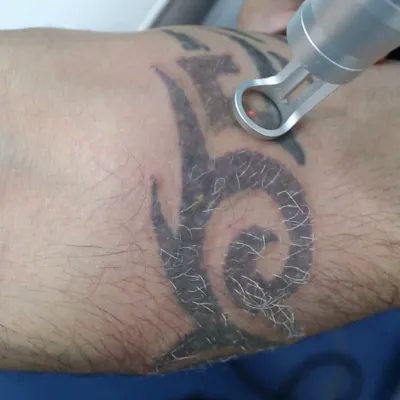
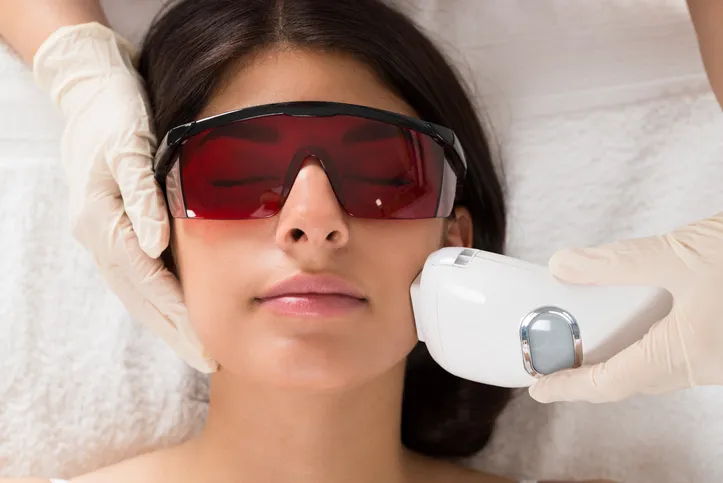
At our clinics, we use the Q-switch laser method. This treatment is considered the most effective for removal of permanent tattoos. The Q-switch laser is a revolutionary technology used for the tattoo removal treatment. The name of the laser comes from the fact that this type of laser machine can produce a pulsed output beam which enables it to produce pulses of very high power.
The high pulse rate and high energy directly target the externally inserted pigments and break them down. They do not affect the surrounding normal cells. Once the pigment molecules are broken down, they are excreted by the body through normal metabolism. Our dermatologists will guide you properly on pre-care and after-care for this laser treatment. It is useful for deeper as well as superficial tattoos and hence provides quick and visible results.
What improvement can look like
Some colours and pigments resist clearance, and complete removal is not guaranteed. Scarring or a residual shadow can remain even after substantial fading.
Laser Tattoo Removal for Unwanted tattoo
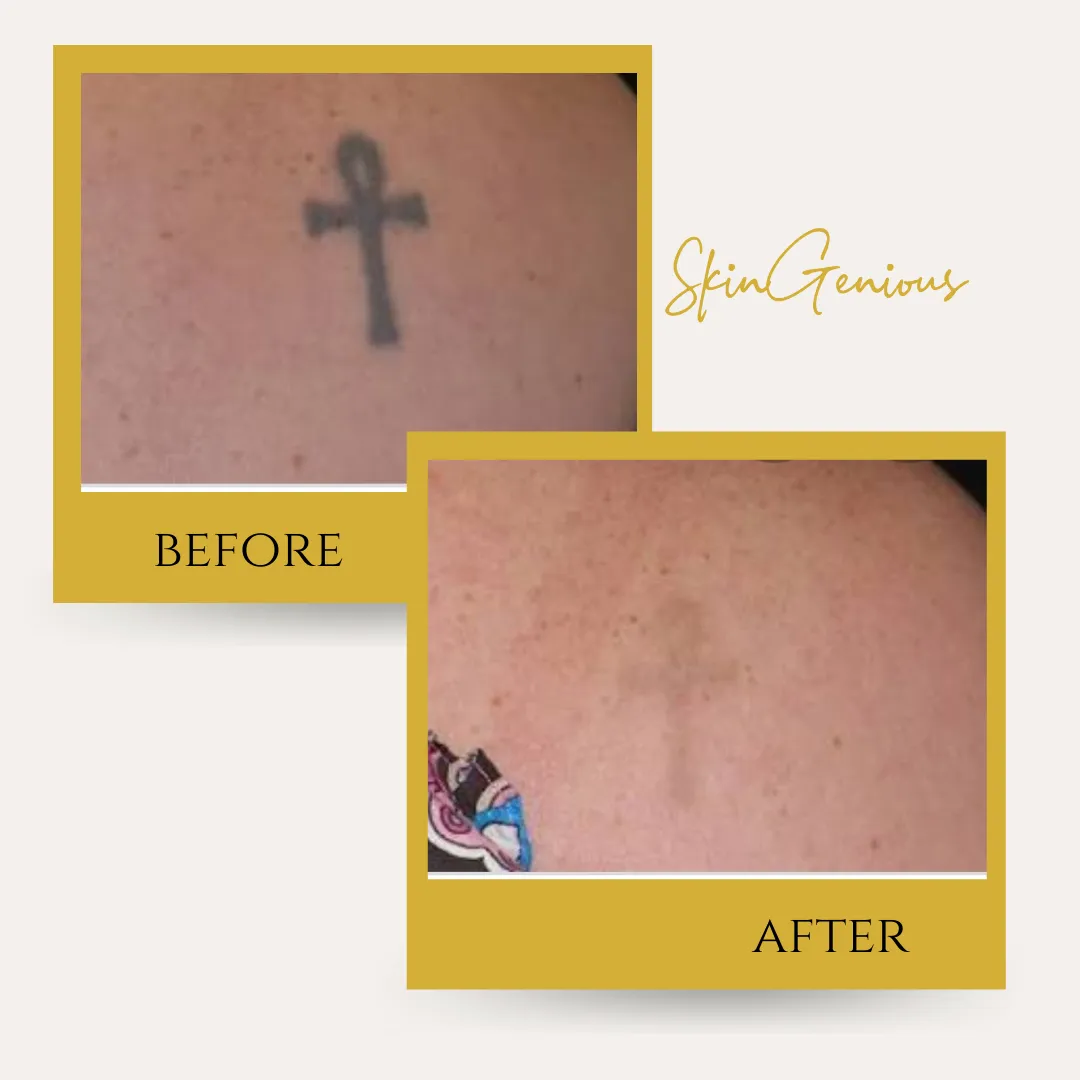
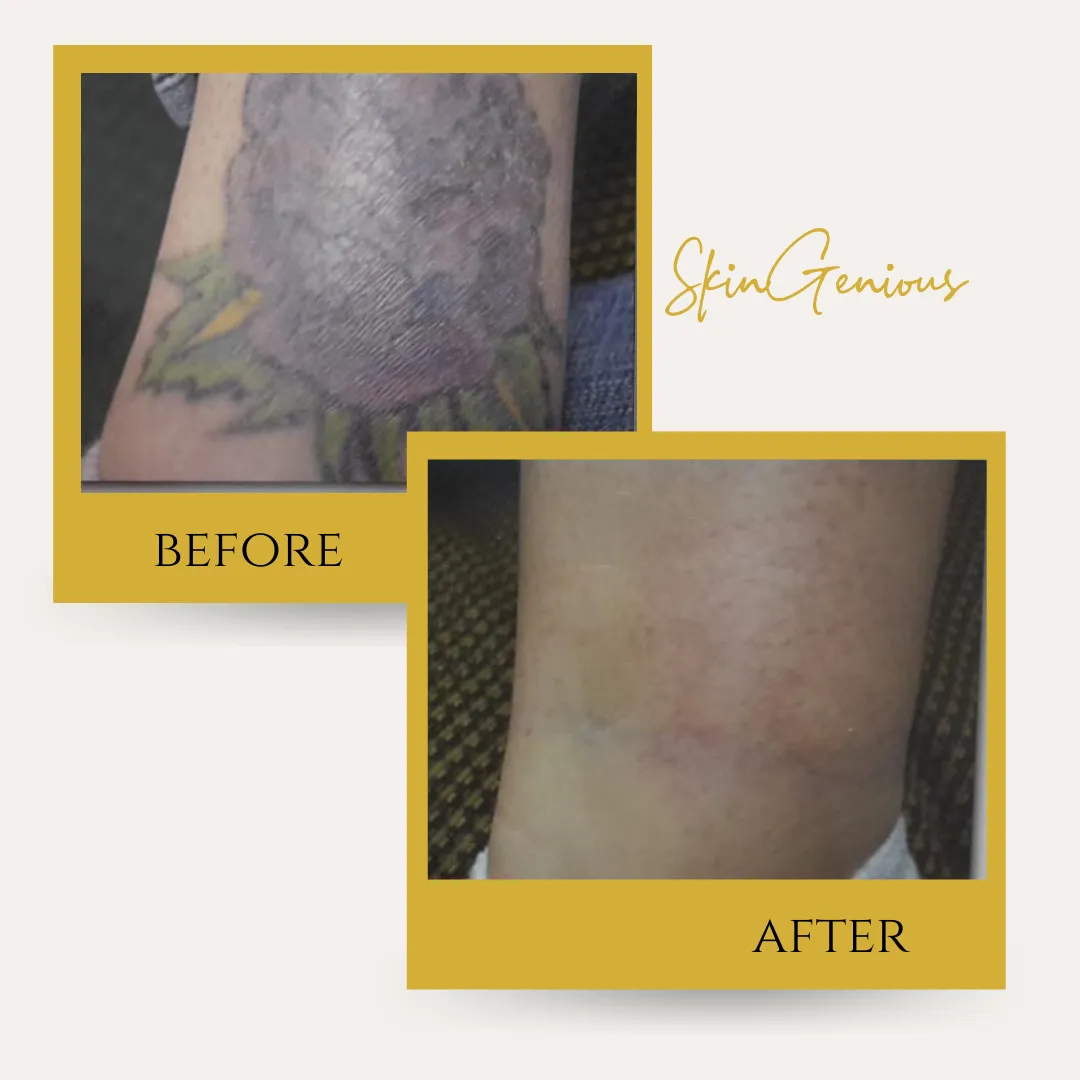
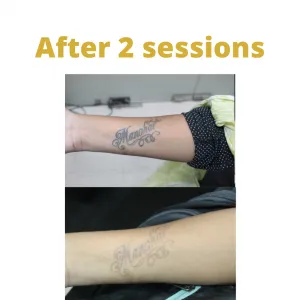
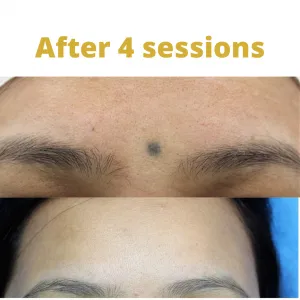
You will require multiple sessions with this treatment. The tattoo will appear lighter in every subsequent session till maximum reversion is achieved. Professional tattoos could take anything between 5-10 sessions whereas amateur tattoos could be managed in 3-6 sessions. Reversion may not be 100% in all cases.
A ghost shadow of the tattoo will almost always continue to be visible, but can easily be covered with cosmetic products.
Before and after results
These photographs come from the existing treatment and concern records. They illustrate individual outcomes. Your starting point, treatment plan and healing response affect your own result.
Understanding your treatment choices
Before choosing removal, decide whether you want the tattoo cleared as far as possible or lightened for a cover-up. That decision can change the treatment goal and the point at which you stop. A tattoo artist and a treating clinician may have different roles in planning a cover-up, so explain the intended result clearly.
Ink colour, density, depth and the skin beneath the tattoo affect response. Some colours need different wavelengths, and a tattoo with several layers of work may respond differently from a simple older design. Previous removal attempts and any raised scar should be shown during the assessment.
A course needs time between sessions for recovery and pigment clearance. Ask which colours are likely to be difficult and whether a faint outline or colour change may remain. A promise of complete removal after a fixed small number of sessions is less useful than a plan that accounts for the actual ink and response.
Follow wound-care advice and avoid picking or unprotected sun exposure while the area heals. Increasing redness, discharge or pain should be reviewed. A new lump, persistent itch or a changing skin lesion within a tattoo also needs assessment; it should not simply be treated as another cosmetic removal problem.
Everyday care and prevention
Do not use acids, sanding or unverified home-removal creams. Protect the area from sun and follow wound-care advice after treatment.
Explore related guides
Continue exploring the treatments, concerns and categories connected with this topic.
Treatment guides
Category guides
Common questions
Is the laser tattoo removal treatment permanent?
Yes. Once the tattoo pigments are removed, they will not come back till you get another tattoo.
Is the laser treatment for tattoo removal painful?
You may feel mild sensations when the laser light pulses are used. Topical anesthesia however ensures that the process in not painful per se.
How is the right care plan chosen?
Assessment considers ink colours, tattoo age and depth, skin tone and pre-existing scars. Cosmetic tattoo pigments may behave differently during laser treatment.
What can I do as part of everyday care?
Do not use acids, sanding or unverified home-removal creams. Protect the area from sun and follow wound-care advice after treatment.
When should I get advice?
Persistent itching, swelling, an ulcer or a changing lesion within a tattoo needs medical assessment before cosmetic removal.
Further reading and references
Take the next step
Explore care in your city
For local specialists, clinic information and appointments, choose a city.

Mumbai
Explore local specialists, clinics and appointments in Mumbai.
Explore care
Thane
Explore local specialists, clinics and appointments in Thane.
Explore care
Navi Mumbai
Explore local specialists, clinics and appointments in Navi Mumbai.
Explore care
Jaipur
Explore local specialists, clinics and appointments in Jaipur.
Explore care