 SCIENTIFIC SKIN, HAIR & PERSONAL AESTHETICS
Treatment guides
Exosome treatment for hair: how it works, suitability and aftercare
Exosome-based treatments are being studied for their potential role in hair growth. Explore the proposed mechanism, current evidence and how they differ from established hair-loss treatments.
SkinGenious editorial team
Explore the guide ↓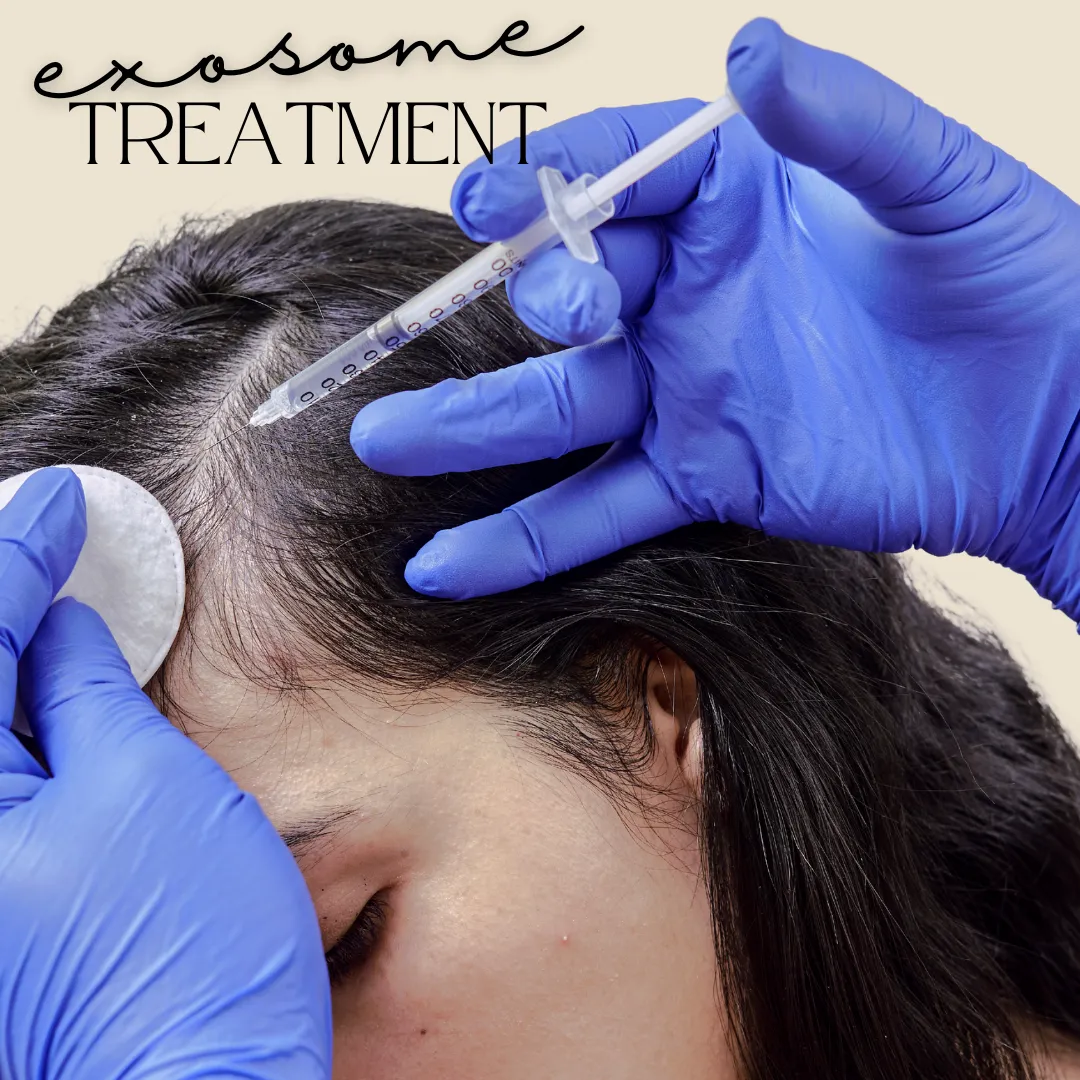
Understanding the treatment
Exosome treatment for hair re-growth is an advanced hair loss treatment which involves injecting exosomes, which are tiny extracellular vesicles derived from stem cells, in the scalp. This treatment helps stimulate hair growth and works on early to middle stages of hair loss.
Exosomes are extracellular vesicles of stem cells that contain protein, growth factors and certain genetic material. Injecting exosomes in the scalp helps, improves the scalp health, promotes hair follicle stimulation and thereby promotes thicker and healthier hair growth. The treatment often requires 2 sessions to see the best results. The treatment delivers potent growth signals to the hair follicle thereby stimulating hair re-growth in various stages of hair loss. It also stimulates collagen production and improves blood circulation, promoting a healthier scalp. Studies have also shown that Exosomes block the effects of DHT (dihydrotestosterone) on the follicles, which is a mail sex hormone that leads to androgenic alopecia.
Exosome-based hair treatments are an emerging area, not an established replacement for standard hair-loss care. Products, sources and methods of use vary, and important safety and evidence questions remain.
How it works
Exosomes for hair growth work not only on early stages of hair loss like PRP, but also on certain later stage hair loss cases. After the treatment you can expect to see:
- A healthier scalp
- Improved hair growth in areas of loss
- Thicker and healthier hair
Exosomes are small extracellular vesicles involved in cell signalling. Laboratory findings do not by themselves show that a marketed product safely regrows hair in people.
Suitability and assessment
A diagnosis should come before considering any emerging procedure. The exact product, manufacturing standards, route of administration and local regulatory status need scrutiny.
What happens during treatment
There is no universally established clinical protocol for exosome hair treatment. Any proposal should be explained as a specific product and procedure, with its uncertainties documented.

In-person Consultation
Consulting the dermatologist is the first step of any treatment at SkinGenious. You will meet the dermatologist, share your concerns and history regarding hair loss. The dermatologist will then make the ideal plan of treatment, which for hair thinning, may be exosomes for hair re-growth

Pre-treatment preparation
Preparation for the treatment involves cleaning up the scalp. After this, numbing cream will be applied to keep discomfort during the treatment to a minimum.
Treatment with exosomes
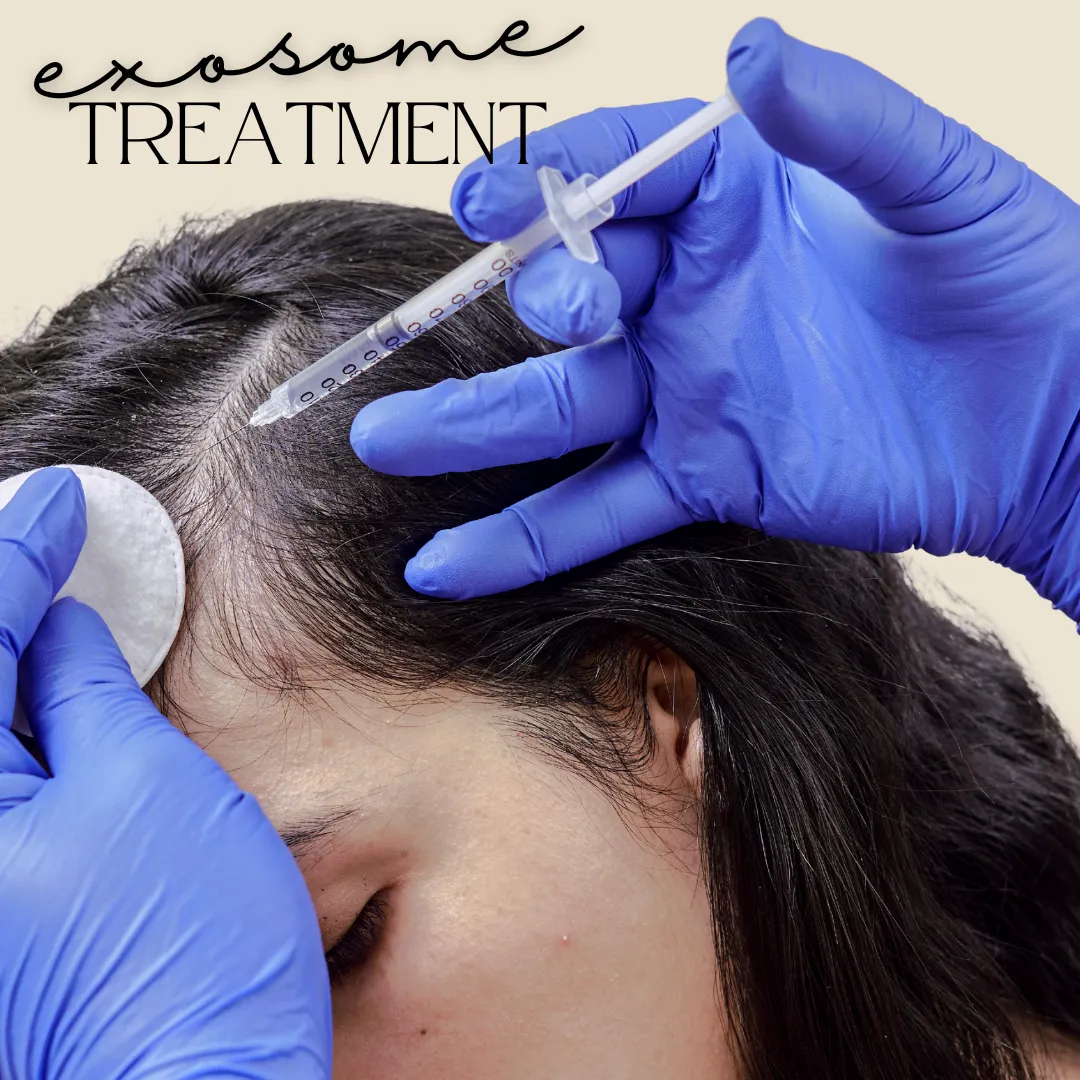
Your dermatologist will mark out the areas for injecting on the scalp followed by injecting the required exosomes. The treatment usually requires 2 sessions at the gap of a month
Results and limitations
Small studies and early research do not establish predictable long-term benefit. The absence of an immediate adverse effect does not prove long-term safety.
Exosome treatment for hair for Hair loss
Exosome treatment is highly effective for early and middle stages of hair loss. It is the best alternative currently available as long as the hair follicle is not dead.
Before and after results
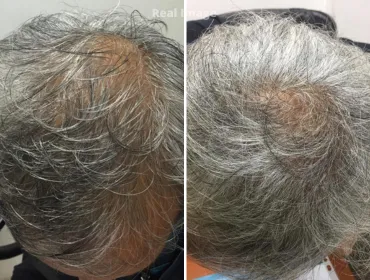
These photographs come from the existing treatment and concern records. They illustrate individual outcomes. Your starting point, treatment plan and healing response affect your own result.
Risks and recovery
Potential concerns include contamination, immune reactions and risks associated with injections or skin penetration. The US FDA states that no exosome products are FDA-approved; that statement is specific to its jurisdiction.
The potential side effects and risks include:
- Redness and swelling at the site of injection, but this will subside within a few hours if it does occur.
- Allergic reactions: Although extremely rare, some individuals may be allergic to exosomes, but your dermatologist will be able to help you manage any of the effects in the rare case that they do occur
- Brusing: Like any site of injection, you may see mild bruising but this can be easily managed and will subside in a few hours
- Mild irritation and itching: A relatively common side effect that will last no more than a few hours
- Infection at the injection site: Is extremely rare and is avoided at SkinGenious with proper procedural precautions
- Headaches: Again a very rare side effect, if they do occur, they will subside a few hours after the treatment.
Overall, exosomes are a very safe treatment provided it is performed in a clinical setting by a reputed practitioner. At SkinGenious, you can be assured that your dermatologist is going to take utmost care of you.
Preparing for treatment
Bring details of previous procedures, medicines, allergies and any change in your health. Ask which skincare products or activities need adjusting before the appointment. Do not stop prescribed medicines without advice.
Any change to prescribed medicines, including blood thinners, must be agreed with the prescribing clinician.
- Before your treatment, it is ideal that you shampoo in the morning before visiting the clinic.
- Make sure you carry your medical history with you and inform your doctor correctly about all questions asked.
- Avoid blood-thinners before the procedure if your physician and dermatologist are in agreement, since avoiding thinners will reduce your chances of bruising at the injection sites.
You can rest assured that all these steps will be cross-verified during your in-person consultation with a senior dermatologist at SkinGenious.
Aftercare
The after-care for your exosome treatment is simple and straightforward:
- Do not shampoo the treated areas within 24 hours of the procedure
- Avoid vigorous exercise 24-48 hours after the procedure
- Follow any other additional steps suggested by your dermatologist, which may include application of certain creams at the injection site.
If a product has already been used, keep its identity and batch details and follow clinical review advice. Seek help for infection, persistent inflammation or a systemic reaction.
Alternatives to consider
Established diagnosis-specific hair-loss treatment should be discussed first. Participation in properly overseen research is different from assuming a commercial treatment is proven.
Planning treatment and maintenance
Exosome-based hair treatments are being explored for their role in cell signalling and the scalp environment. The term describes a broad area of developing treatment rather than one standardised product. Product source, processing, ingredients and method of application can vary substantially.
Start with a proper hair-loss assessment. Even a promising procedure needs a clear diagnosis and a measurable goal. A person with early patterned thinning may need a different plan from someone with sudden diffuse shedding, an inflamed scalp or longstanding areas without functioning follicles.
Ask exactly which preparation is proposed and how it is supplied and used. Request an explanation of the clinical evidence for that product and route, not just for exosomes as a scientific concept. It is also useful to discuss how it compares with established medical treatments and PRP in your particular situation.
Photographs and scalp measurements should be recorded before treatment and reviewed at meaningful intervals. Emerging evidence is a reason to evaluate progress carefully, not to dismiss a potential benefit or assume that every preparation will work the same way. Agree the number of sessions, the review point and what would lead you to continue or change the plan. Keep the details of the preparation in your treatment record.
What affects the cost
The area treated, the product or device, the treatment plan and the number of sessions influence the total. A useful estimate explains what is included, what follow-up involves and whether maintenance is likely. City pages provide the local service information.
Explore related guides
Continue exploring the treatments, concerns and categories connected with this topic.
Treatment guides
Hair transplant
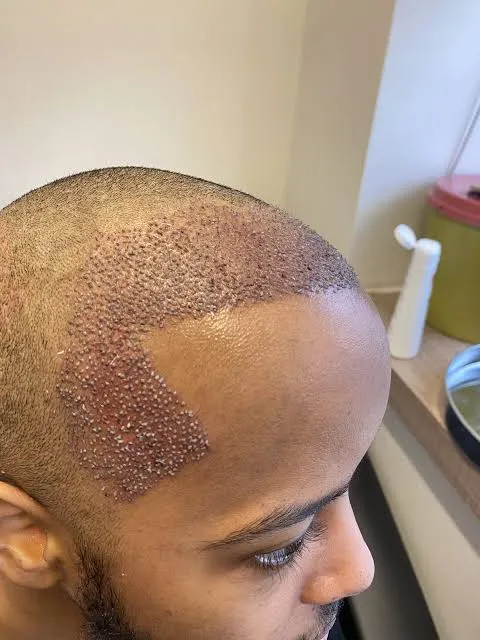
Hair transplantation moves follicles from a donor area to selected areas of thinning. Learn about planning, the surgical stages, recovery and the factors that shape long-term density.
Read the guide
Mesotherapy
Mesotherapy uses small injections to deliver a specified preparation into selected areas. Understand why the ingredients and purpose matter more than the treatment name alone.
Read the guide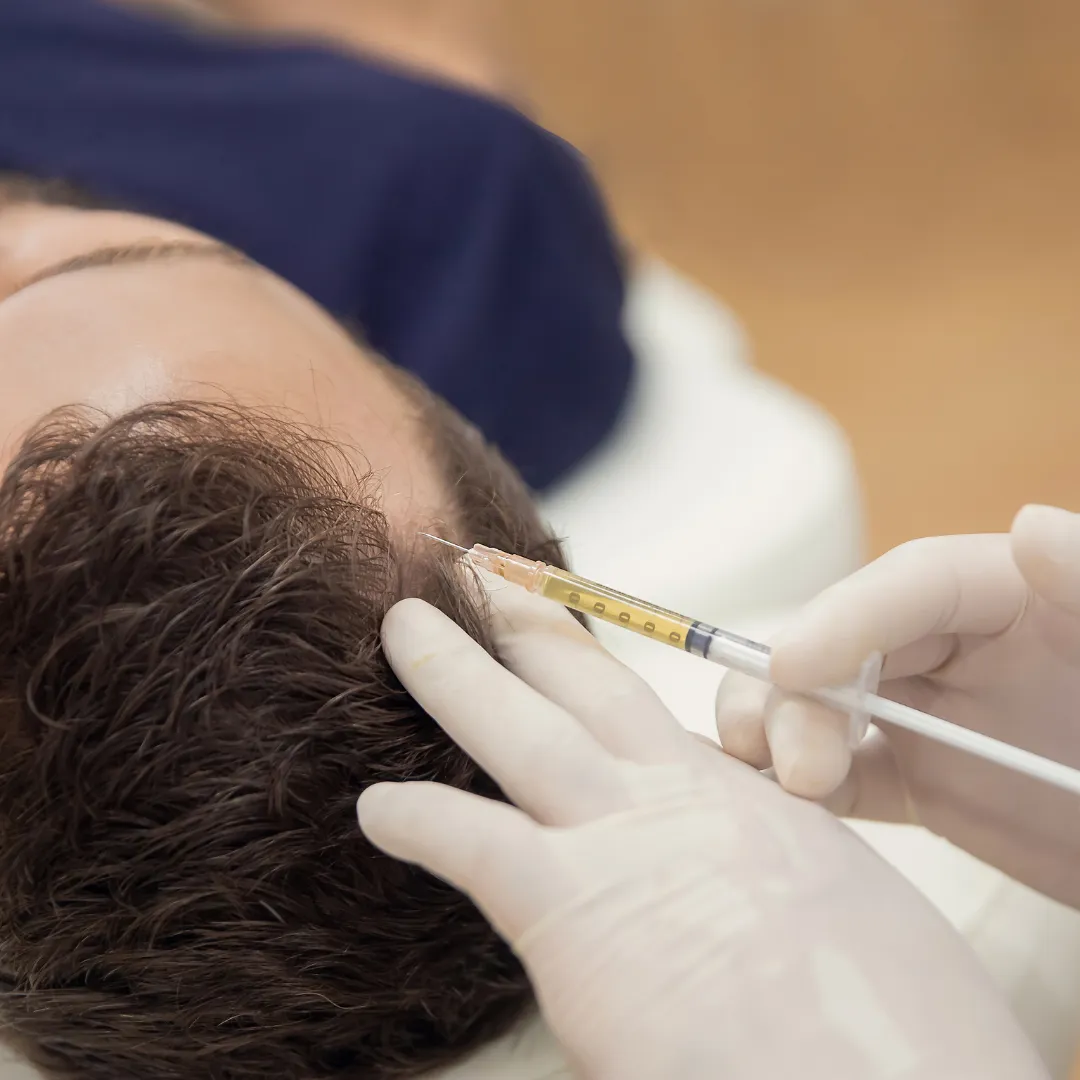
PRP hair treatment
PRP hair treatment uses a preparation from your own blood to support selected hair-loss care plans. Learn how the diagnosis, scalp assessment and treatment course influence the result.
Read the guideConcern guides

Category guides

Common questions
What should I understand before choosing exosome treatment for hair?
A diagnosis should come before considering any emerging procedure. The exact product, manufacturing standards, route of administration and local regulatory status need scrutiny.
What results should I expect?
Small studies and early research do not establish predictable long-term benefit. The absence of an immediate adverse effect does not prove long-term safety.
How do I compare this with other options?
Established diagnosis-specific hair-loss treatment should be discussed first. Participation in properly overseen research is different from assuming a commercial treatment is proven.
Further reading and references
Take the next step
Explore care in your city
For local specialists, clinic information and appointments, choose a city.

Mumbai
Explore local specialists, clinics and appointments in Mumbai.
Explore care
Thane
Explore local specialists, clinics and appointments in Thane.
Explore care
Navi Mumbai
Explore local specialists, clinics and appointments in Navi Mumbai.
Explore care
Hyderabad
Explore local specialists, clinics and appointments in Hyderabad.
Explore care
Jaipur
Explore local specialists, clinics and appointments in Jaipur.
Explore care